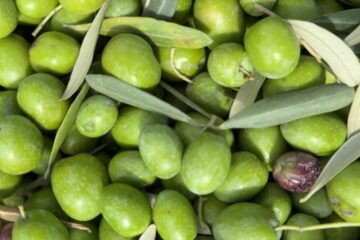
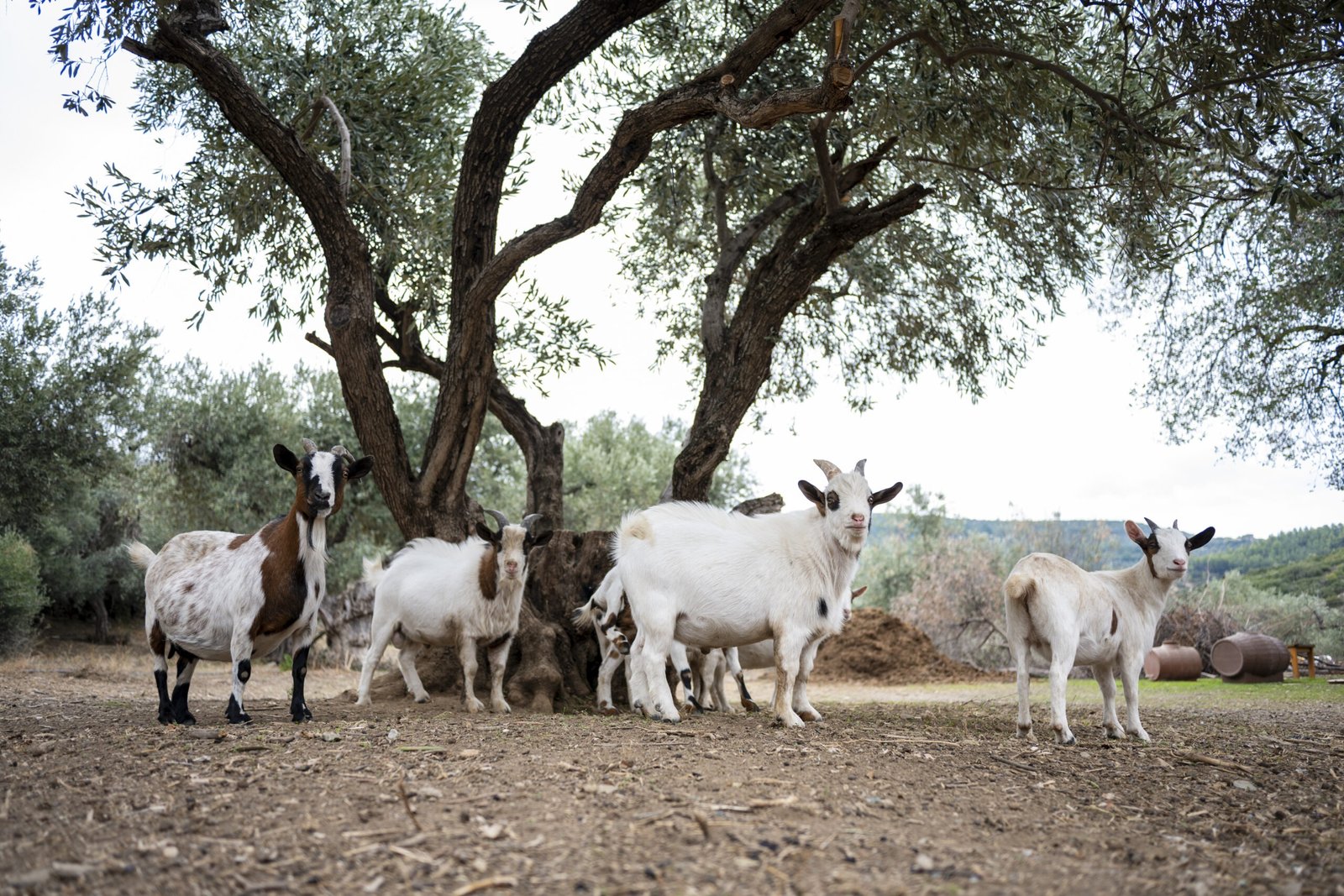
Across Mediterranean landscapes, goats have roamed freely among olive trees for thousands of years. This relationship is more than picturesque – it’s ecological. At Pilio82, we believe in restoring the harmony between animals and perennial crops as part of a regenerative farming philosophy that leads to healthier soil, stronger trees, and better olive oil.
The miniature goats grazing on our land are a perfect fit thanks to their small size. They move easily between the rows, help keep the grass low, and, because of their height, they never reach the olive trees themselves. This makes them ideal for maintaining the area without harming the orchard.
But why goats? And how do these curious, nimble animals contribute to a thriving olive grove?
Natural Ground Maintenance – Without Machines or Chemicals
Goats are exceptional grazers. They seek out brush, grasses, and weeds growing beneath the trees, vegetation that can compete with olive roots for nutrients and water. By controlling excess growth:
The soil remains exposed to more oxygen and water infiltration
Fire risk from dry shrubs is dramatically reduced
We avoid synthetic herbicides and heavy machinery
Their grazing mimics natural ecosystems, helping maintain balance within the grove.
Nutrient Recycling: From Forage to Fertility
Every bite a goat takes eventually returns to the soil as organic fertilizer. Goat manure is rich in nitrogen and beneficial microorganisms, supporting:
Soil structure improvement
Increased microbial activity
Enhanced nutrient availability to olive trees
This creates a living soil, the foundation of regenerative agriculture.
Hooves that Heal
While tractors compact soil, reducing air pockets and root breathing capacity, goat hooves do something different. Their naturally uneven steps:
Lightly aerate the topsoil
Help incorporate organic matter into the ground
Support better water penetration and root expansion
It’s a soft engineering system powered by nature itself.
Microbial Diversity and Ecosystem Health
Healthy olive trees depend on a vast community of underground life: fungi, bacteria, insects, roots, and more. Goats contribute to this biodiversity by:
Spreading microorganisms across the grove
Encouraging dynamic plant regrowth cycles
Supporting beneficial insect habitats by keeping vegetation varied rather than uniform
A resilient ecosystem produces more resilient olives.
Less Waste, More Life
Instead of burning or removing pruned branches and fallen leaves, we allow goats to browse small trimmings. They transform what would be waste into nourishment, closing the loop in a circular, zero-waste system.
Regenerative Agriculture for the Future
When we integrate goats into our olive grove, we are not just producing olive oil – we are rebuilding soil health, capturing more carbon, and strengthening rural traditions that honor the land. This approach contributes to:
Higher-quality olives with richer polyphenols
Lower carbon footprint compared to mechanized management
A return to ancient, nature-based farming wisdom